Monday, April 30, 2012

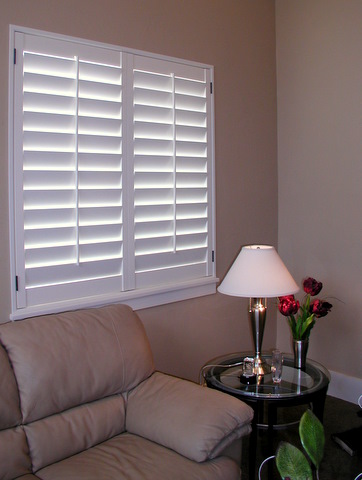
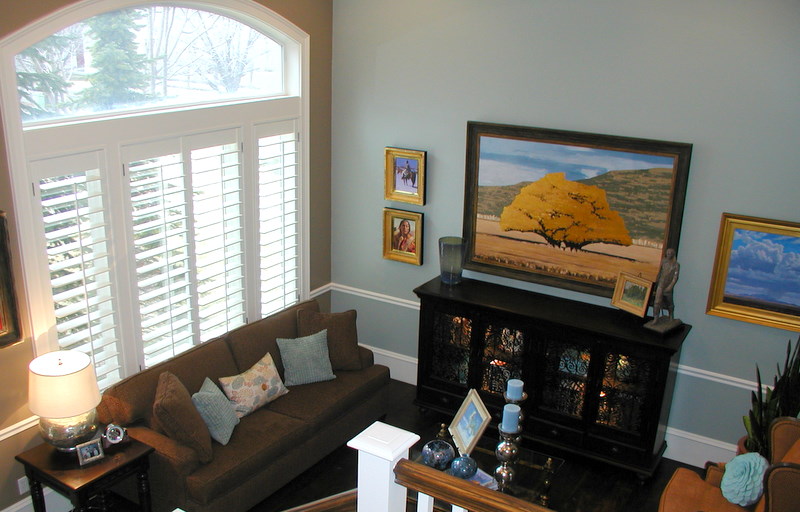
Wood Shutters for an Elegant Statement


Our Colonial shutters are made with premium Basswood. The name Basswood is derived from the inner bark, or “bast” of the tree which was used by Native Americans to make rope. Basswood is one of the most versatile hardwoods available in the United States because its natural color is a light creamy white and it has a relatively smooth grain structure which makes the wood adaptable to almost any application.


Because of these characteristics Basswood can be either painted or stained depending on the needs of the customer. While painted finishes on Basswood are satisfactory, most of our customers do not have us paint Basswood because it is more expensive then other products. The smooth, clear grain structure of Basswood gives the stained Colonial shutters a classical or traditional look and feel. Basswood usually does not have very many knots and even when they are present the knots are small and tight. If the rustic, open-knot look is what you prefer you may want to consider the Georgian Lodge shutter made from Knotty Alder.

The light, natural color of Basswood makes it very versatile when staining. Stain colors may vary from the lightest maple to the darkest cherry, oak, or walnut. No matter what stain color you have Basswood can be stained to match. This gives you the beauty and natural variation of hardwood combined with the ability to select the exact stain color that matches your décor. Our Colonial shutters are also well suited to mimic other natural hardwoods like Cherry and Oak. Since the natural grain of Basswood is so light it can be stained to match almost any color or species of hardwood.

While it is possible to make Cherry or Oak shutters most, of our customers prefer not to pay the premium that would be charged for those woods, especially since it is the color they are really looking for and not the expense. If you are looking for a relatively inexpensive traditional shutter the Colonial shutter is a perfect choice. Because stain grade shutters allow the natural grain of the wood to show through the finish it is important to choose a hardwood that best matches the grain patterns of the wood in your home. The Colonial shutter made with Basswood has a clear grained (small or no knots) wood. Because of that unique pattern, Basswood lends itself more to a classical or a traditional decorating style.


Basswood is one of the more versatile hardwood species since the natural color of its grain is very light and its grain structure is relatively smooth and consistent. These pictures illustrate the light and dark extremes that can be achieved using Basswood. Basswood is frequently used to mimic other natural hardwoods such as Cherry, Oak, and Maple. When decorating your home it is not always necessary to use the same specific species of hardwood in all your stained applications. It is more important to make sure your colors blend well together.


The Leading Edge of Shutter Design


Stanfield Shutter has always been on the leading edge of shutter design and style. Many of the designs currently used in shutters were developed right here at Stanfield Shutter. Because we have always been at the head of the shutter industry many of our customers have asked why we don’t promote the supposedly revolutionary hidden tilt rod or “rodless” design. The following is a comprehensive response to that question and provides multiple concrete explanations why we keep the standard tilt rod.


First, a standard tilt rod is made of solid hardwood. This gives the standard tilt rod strength, durability, resistance, and rigidity. Hidden tilt rods are usually made of thin aluminum, steel, or plastic. The metal hidden tilt rods have a tendency to bend and crimp because they are so thin and they are only held in place on one side instead of both sides. The plastic hidden tilt rods have problems becoming inflexible and brittle under the intense sunlight causing them to break. Either way, a plastic or metal hidden tilt rod is inferior to its standard wooden counterpart.


Second, in order to attach the hidden tilt rod to the louver the back side of the stile must be routed out to allow a place for the hidden tilt rod to rest. This exposes the pins upon which the louvers rotate. Exposing the pins reduces their strength and durability. It also exposes them to sunlight damage which can cause them to become brittle and break just like the plastic hidden tilt rods. 


Third, since the stile is routed out the shaft of the louver pins must be made longer than normal. The longer pins do not retain the same tension strength and resistance as their shorter counterparts. The longer pins are also not as strong because more of the shaft is exposed which causes them to break more. 


Fourth, the hidden tilt rod, which is placed only on one side of the shutter panel, causes an unbalanced
distribution of force across the louvers. This reduces the functionality of the louvers and causes the
louvers to close unevenly.


Fifth, in order to attach the hidden tilt rod to the louver a nail must be driven through the hidden tilt
rod and into the very edge of the louver. This particular position is a weak point on the louver which results
in nails splitting the louver blade or nails not holding properly and working their way out. If the nails
work their way out they will at least damage the back side of the stile when the blades are rotated and at
worst will split the louver apart requiring the replacement of the louver itself.


Sixth, we are creatures of habit. We eat the same way, tie our shoes in the same manner, and we
open and close our shutters in the same way. If the shutter does not have a standard tilt rod we must use
the louvers themselves to rotate the shutter open and closed. Individuals tend to use the same louvers each
day. Those louvers weaken over time and eventually break which requires their replacement.


Seventh, shutters are purchased not only for their longevity and quality, but also for their architectural
and aesthetically pleasing design. Part of a shutter’s architecture is the tilt rod in the center of the
panel. Without it the shutter takes on the appearance of a blind. It begs the question why anyone would
spend more for a shutter only to get the look of a blind instead. Shutters are a status symbol. We want
people to know we own shutters. But how will they know you purchased shutters if they look like blinds?


While Stanfield Shutter has the capability and expertise to produce the hidden tilt rod shutter we
strongly discourage it for these reasons. In the end, the choice is always left to the consumer and we will be happy to provide you with whatever shutter design you prefer.

Thursday, April 26, 2012

Window covering specialists come to you....

Conveniently located near the heart of downtown Salt Lake City is Stanfield Shutter Company.  Utah's first locally owned shutter shop was began by Paul Stanfield way back in 1950.  From humble begins as a one man wood working shop, the company has grown into Utah's largest and most up to date shutter manufacturer.  Using state of the art equipment Stanfield Shutter company has evolved into the most specialized and artistic shutter shop in the Intermountain west.


In the mid-70's Gary Stillman worked as general manager for Paul Stanfield and shortly thereafter came to an agreement with Paul to purchase the company.  With his big ideas and strong work ethic, Gary expanded the company in to the largest custom shutter company within the intermountain west.   From the traditonal 1" louvers slats of days gone by to the elegant popular larger louvers or 4 1/2" and even 5 1/2", plantation shutters have taken on a tasteful desing all their own.


Shutter are known for there aesthetic beauty and environmentally friendly plantation shutters currently used today.  Finding that the beauty of shutters is not only in the curb appeal but also in the benefits of helping to regulate your homes climate. With shutters you gain the benefit of keeping the harsh UV rays out of your home during the hot summer months, thus helping to keep your home cool.  As well as keeping your home warm during the cold winter months as the plantation shutters close tight and help to fight off the cold chill from 'old man' winter. 


Since purchasing the company many years ago Gary has worked along side his family to build a successful family business.  Stanfield Shutter has been in business for OVER 60 years.  Gary attributes his success to the dedication of his employees to work with individual home owners and to assure that each shutter is custom manufactured, professionally finished and expertly installed to exceed the expectations of the customer.


Custom plantation shutters are just the beginning at Stanfield Shutter, other services offered include artist architectural shapes or geometric shapes too.  Stanfield Shutter also can refurbish shutters as well as professionally repaint and restore time worn shutters. You are only limited by your own imagination with the work and professional craftsmanship offered by Stanfield Shutter Company.

Friday, April 6, 2012

The Lion House a Historical Landmark

Salt Lake City -

Downtown Salt Lake city with all of it's historical charm and interest was the site of a recent project for Stanfield Shutter Company. Located near the corner of South Temple and State Street is the Lion House. The Lion House gets its name from the lion that sits on top of the front patio. Constructed in 1855-56 it was a residence for Brigham Young, who was the second president of the Church of Jesus Christ of Latter Day Saints and later the first territorial governor of the state of Utah.

Local Contractor Interior Design Solutions was awarded a contract to remodel the Restrooms of the Lion House. Stanfield Shutter was called into action to replace the traditional shutter that had been in use in the restroom for years. It was an exciting opportunity to go behind the scenes of one of Utah's most notable building and see the historical craftsmanship of the Pioneers of Utah.

Going from 1 1/4" traditional smaller sized panel style shutter to the 2 1/2" plantation shutters was a nice update to the traditional feel of the building. A trademark look of the Lion House is the original triangular shaped windows crafted from the pioneers of decades ago. It was a good idea to stop the shutters in a "Cafe Style" at the base of the triangular shape. Leaving the Steeple top open gives the benefit privacy for the lower section in tum leaving the top open gives you natural light.

It was an honor and privilege to construct shutters and help beautify such a historical building. We appreciate working with each one of our valued customers, and by completing a project such as this we can definitely say that quality and satisfaction are dear to our business and we delight in the ability to continue to provide quality products to everyone.

Friday, February 10, 2012

Beauty and Quality to Any Decor

When it comes to window coverings, most people are unsure what to use to meet their particular need. While there are many window coverings on the market today, every product has a distinctive look and purpose.

The selection of window coverings can be guided by both your imagination and your own good taste. You need not make costly mistakes when there is professional help available to advise and direct you.

Plan for how your windows will look from the outside by using compatible window coverings both upstairs and down on windows facing the street. Remember that your window covering set the mood for your home and make a statement about your decor.


Do you need window coverings that block out all light? Or treatments that let in light and still insulate windows to block heat and cold? How much color do you want on the windows? These are important questions to answer yourself.

Next, ask questions of the professional who is helping you. Together you two can figure out what works on each window and you can let the professional show you how to create consistency in your decor from room to room.

Take chatters, fro example. They are extremely versatile and add ambient value to your home. They offer so much and give you so many options for controlling light and the hot Utah sun. With just a slight tilt, you can see outside and still let in the light you need. Open the shutters wide and have an unobstructed view of the mountains or of your backyard oasis.


The plantation shutters of the 90's will take you into the next century in style. With new technology you can choose hardwoods like Walnut, Cherry, Oak, Alder and Basswood for elegant stained shutters that are milled, stained and finished to perfection. Woods like Knotty Pine and Knotty Alder also do well in exposed knot or rustic shutter applications.

In addition, new High Density Fiberboard, which meets the high standards of professional woodworkers and craftsmen, is now available. This is a fine paint grade wood that meets your quest for both quality and beauty. HDF is extremely durable and warp-free. Other alternatives for the custom shutter industry are Thermolite, Polylite and Ultralite synthetics and composites.

When looking for a custom shutter manufacturer, find an experienced craftsman who has an extensive woodworking background, the proper automated machinery to do fine work and one who can offer you a full range of options.


Ask for an in-home presentation by a professional shutter designer who can show you samples of different-sized louvers and who will correctly measure your window. Be sure they custom-manufature shutters and mounting boards just for your home, and that they are a reputable company who stand behind their work.

For a full-service consultation on long-lasting quality shutters in your home or office, you can call Stanfield Shutter Co., In., at (801) 467-8823 or e-mail at shutters@stanfieldshutter.com.

Add Drama and Beauty to Your Home with Exciting Plantation Shutters

Making a room truly memorable begins with elegant appointments and your personal attention to the smallest detail. Dramatic window coverings make a statement that defines your good taste, especially when you've chosen Plantation Shutters.

Although the fabulous Plantation Shutters of today has humble beginnings as exterior applications in Europe, they slowly worked their way inside homes in a non-movable louvered version. Luckily craftsman and artisans moving to America brought the shutter idea along.


Refinements and automation have evolved the woodworking industry toward the 21st century to accommodate custom homes requiring hardwoods that are milled, stained and finished to perfection. Plantation shutters used as window coverings became the crowning achievement.

Today's hardwoods such as Walnut, Cherry, Oak, Alder and Basswood make elegant stained shutter installations. Softer woods like Pine and Cedar also do well in exposed knot or rustic shutter applications.

However, with the closing of many forests in the 1980's, many sources of good wood to paint were lost. Necessity engineered the development of a High Density Fiberboard, which met the high standards of professional woodworkers and craftsmen.


Custom shutter manufacturers benefited from tis quest for quality, beauty and enduring products because it is a fine paint grade wood. The finished product becomes a work of art with no worries of warping, pitch bleed out or other problems.

Top builders and finish carpenters use this beautiful wood product for custom moldings, crowns, baseboards, custom mantels, bookcases and shelving.

When looking for a custom shutter manufacturer, find an experienced craftsman who has an extensive woodworking background and has the automated machinery necessary to do fine work.

Have an in-home presentation by a professional designer who can show you samples of different-sized louvers, and who will measure your window for shutters to be scaled to the correct size. Be sure they custom manufacture shutters and mounting boards just for your home and that they are a company who stands behind their work.

For a full service consultation in your home or office for long-lasting quality shutters, you can call Stanfield Shutter Co., Inc., (801) 467-8823 or e-mail at shutters@stanfieldshutter.com.

Timeless Elegance and Class

Over the last decade, interior moveable louvered shutters have taken over the window covering decor. This overwhelming shift is due to advances in the shutter industry that allow shutter manufacturers to offer the elegance and durability of shutters at an affordable price.

Consumers have a number of decisions to make when purchasing shutter. The first choice is usually whether to paint or stain the shutters. Painting provides a uniform color throughout the shutter whether that is white, off-white, cream, beige, etc. Staining allows the natural grain of the wood to show through the finish. Interior designers suggest matching your molding or woodwork. If you do not have molding or woodwork, interior designers suggest staying with the classic white since white matches anything.


Next, consumer met choose what shutter material they like. High Density Fiberboard (HDF) is a technologically refined and advanced product that is the favorite for painting because it is warp-free and prides a superb finishing surface. Natural hardwoods such as Basswood and Knotty Alder are the favorite choices for a stained look. Waterproof vinyl products are also available for use above kitchen sinks or in shower stalls.


Once the material as been selected, the louver size is chosen. Louvers are the blades that rotate to open and close the shutter. The most popular louver sizes are 3 1/2 and 4 1/2 inch. The 3 1/2 inch has a more traditional decorating feel while still offering a nice view. The 4 1/2 inch is more contemporary and is used by consumers who have a spectacular view, or who want to keep the room as open and light as possible. Consumers looking for a truly unique look can select from louver sizes ranging from the traditional 1 1/4 inches to the plantation's 6 1/2 inches.


Finally, consumers should take special care when selecting a company to build their shutters. Unfortunately there are a number of here-today-gone-tomorrow businesses that are in it for a quick buck, and not concern with quality products or future service to their customers. Consumers should look for a company that has its roots well established in the community and a history of providing not only high quality and professional products, but also high quality professional service.

Stanfield Shutter has provided all of these products and services to the residents of Utah for over 60 years. For more information, you can call them at (801) 467-8823, visit them on the web at www.stanfieldshutter.com, or e-mail them at shutters@stanfieldshutter.com.