Monday, November 14, 2011

Real Problems, Real Solutions (Part 1) - Engineered Hardwoods


Stanfield Shutter Company is Utah’s most reputable and oldest custom shutter manufacturer. We have been building your shutters here locally in Salt Lake City for OVER 60 years!

Stanfield shutter continues the tradition of giving you the most advanced and up to date construction and manufacturing processes in the shutter industry today.  Looking to the past as an “old time” company we have learned the importance of meeting the needs of our clients and giving their windows the best shutters possible.  Looking to the future with our clients in mind we have made the commitment at Stanfield Shutter to compliment the beauty of your shutters by using “Green” materials and sustainable building products.  The past few years, much advancement has been made in the construction industry with more attention being given to the sustainability and use of our natural resources.  Our mother earth has given many resources for which we may build our communities and homes.  It is our responsibility as a business to use those resources wisely and to meet the needs of our clients without compromising the integrity of the future.

The need for “green” products is more urgent today than it has been in the past.  Being green is nothing new. It has always been about good manufacturing practices, using quality products, and creating a shutter that reduces heating and cooling costs; while providing a healthy and safe living environment for you, our clients.  Stanfield Shutter began using green engineered hardwoods during the 1980’s.  The wood fibers used in our Savannah plantation shutters make use of every last bit of the tree fibers.  This results in reduced pressure on our forests and complies with the goal of sustainable lumber harvesting. Engineered hardwoods also reduce the waste that is added to our landfills; as well as using less labor and energy to produce your shutters, which results in a smart investment of quality shutters for less cost to your pocket book.


Our Savannah shutters are made from engineered hardwoods which are an environmentally preferable product or EPP. The EPP provides an independent certification of wood composite products that are demonstrably environmentally preferable through their use of recycled and/or recovered wood fibers with adherence to specific emission standards.  Unlike wood materials that come from over seas, such as China, our domestically made and used engineered hardwood materials are produced to strict environmental standards made by the Environmental Protection Agency.  With the concern of unhealthy emissions from off shore products you can be assured our American lumber suppliers are producing materials that are green, and healthy for you and your family.


In addition to the EPP, our engineered hardwood suppliers are participating members of the ‘Sustainable Forestry Initiative’ or the S.F.I.  The S.F.I. program was organized with the vision for sustainable forest development. The SFI is based on principles that promote sustainable forest management and considers all forests valuable.  When you see SFI on the label of a product, either a ream of paper, packaging material or a 2 X 4, you can be confident you are buying a product that has come from responsibly managed North American forests.

Over the past 20 years Stanfield shutter has used Premium Engineered Hardwood.  Engineered Hardwood, specifically High Density Fiberboard (HDF), is scientifically designed with cross grained hardwood fibers, blended together with industrial strength resins. The cross grained wood fibers and the resins work together to offset the movement that occurs in natural woods. Natural wood expands and contracts in the direction of the grain; however,  the cross fibers of the engineered woods stabilize one another, resulting in a product that is less susceptible to the effects of moisture and temperature change.


If you are looking for the highest quality and most affordable painted shutter in the industry today look no further than our Savannah Shutters.  With our manufacturer life-time warranty and attention to detail your shutters will last for years to come. 

Invest now for a life time of pleasure with Stanfield Shutters Savannah shutters. 

Creating elegant, beautiful and fine crafted shutters for your home for OVER 60 years.

Call Stanfield Shutter today for a free in home consultation at 801-467-8823 or visit our website – www.stanfieldshutter.com

Monday, October 31, 2011

Autumn Plantation Shutters....

The autumn brings out beautiful colors with the change in the tree leafs, as well as a chill to the air with Ol' Man winter coming to town.

Stanfield Shutter can help to beautify your home with custom plantation shutters to compliment your autumn colors.  As well, shutters will add to your festive holiday decor with our many styles to choose from.

Plantation shutters are great to insulate your home and to give you protection from Ol' Man winter.  Plantation shutters can have up a 6 R-Value. Helping to keep heat in your home where it belongs on those chilly fall days.

See further below how Stanfield Shutter helped the Landvatter Family of Herriman Utah add to their fall season decor.  Beautifully Stained Basswood Shutters worked great for their home decor.

Shutters for Sliding Glass Doors are great for Shutters. Wide Panels to let the view in as well as all the great natural light you can handle!

 Bi-Pass Shutters Slide in Front of Sliding Glass Door.

  Bi-Pass Shutters slide open for easy access to your back yard patio.....

 BiPass Shutters open with one half fully opening the same way your door slides for a great view and easy access to get in and out of your opening.


 Kitchen Bay Shutters with White window have a great contrasting look....
 A 2" Facer Frame Completes the look around the window as well as covering up an unsightly gaps or spaces between the wall and shutters frame.....


 Entry Sidelite Shutters are great to give you privacy when you need it by your front Door....


Monday, October 17, 2011

Keepin’ it here at Home ... Utah’s Own Shutters...


Stanfield Shutter Company is Utah’s most reputable and oldest custom shutter manufacturer. We have been building your shutters here locally for OVER 60 years!

Buying local in Utah is not only a great way to become more sustainable without a lot of effort, it also helps you learn more about your city. Seek out local merchants the next time you need a product. The reason’s are clear to buy local;


1.  Local Utah businesses produce jobs for local communities.

2.  Local Utah businesses are more likely to utilize local ads, banks and other services.

3.  Local Utah businesses donate more money to nonprofits and are more accountable to their local communities.

4.  Supporting local Utah businesses preserves the economic diversity of our communities and the unique character of our neighborhoods.

5.  Supporting local Utah business is good for the environment, because it cuts down on fuel consumption. Buying locally produced goods reduces the need to ship goods from thousands of miles away and also cuts down on the distances shoppers travel.

Although it may cost a little more in the short term to buy local, there are long term benefits. Buying locally in Salt Lake City helps build your community by increasing employment and developing greener technologies. The quality of local food and goods are often of a higher quality. Also consider that with a higher percentage of money staying in your community, there is more revenue for civic and municipal uses, better schools, and sponsor the arts and letters in your community.

Stanfield Shutter Thanks you for your support as Utah’s oldest and largest custom plantation shutter manufacturer.  For the past 60 years we have worked to beautify Utah homes with our locally made shutters.  We invite you to have Stanfield Shutter show you how adding plantation shutters to your home can improve your homes appeal and environment.  Call today for a free in-home consultation at 801-467-8823 or visit our website at www.stanfieldshutter.com

Tuesday, September 13, 2011

Putting the Plant in 'Plant'ation Shutters

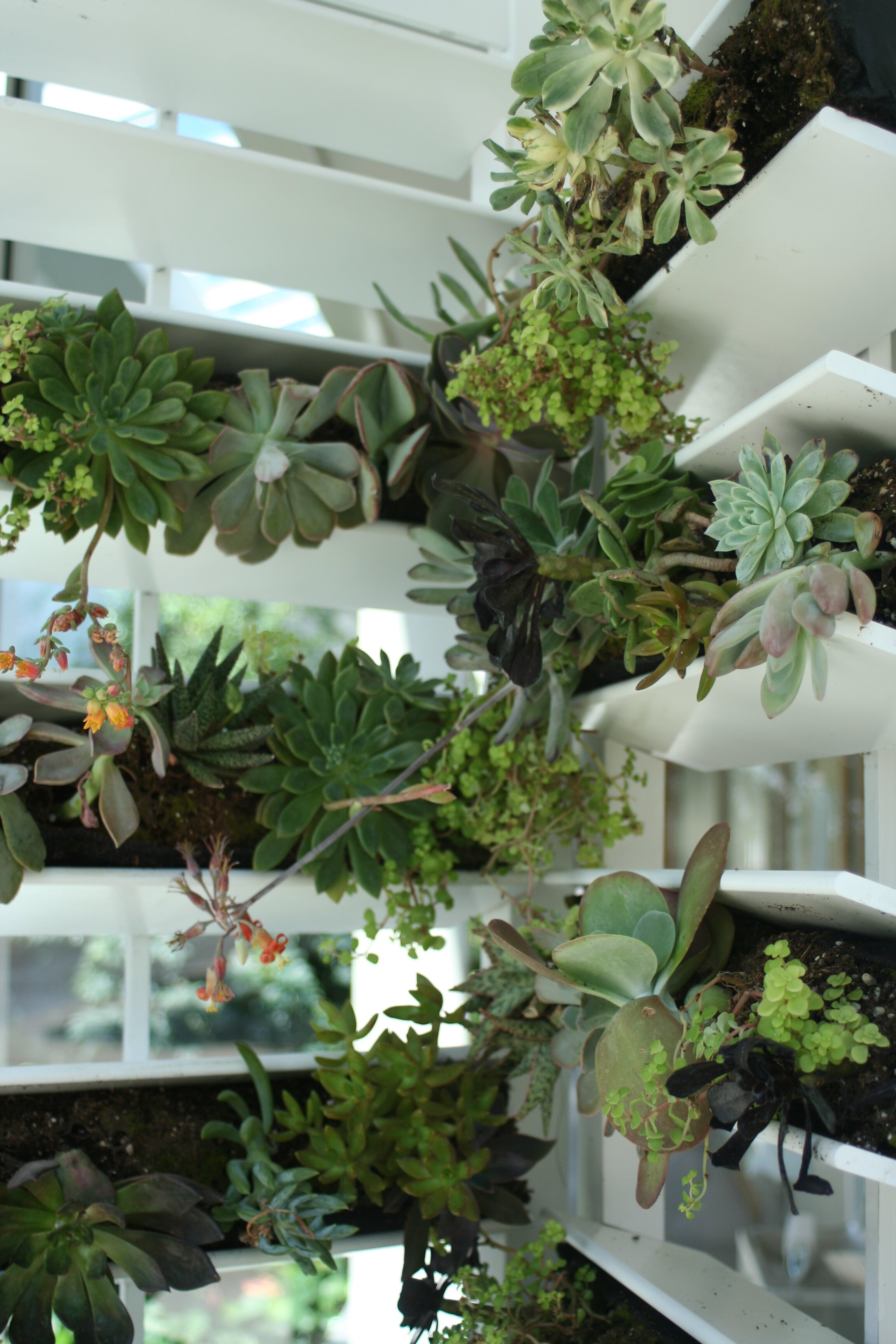
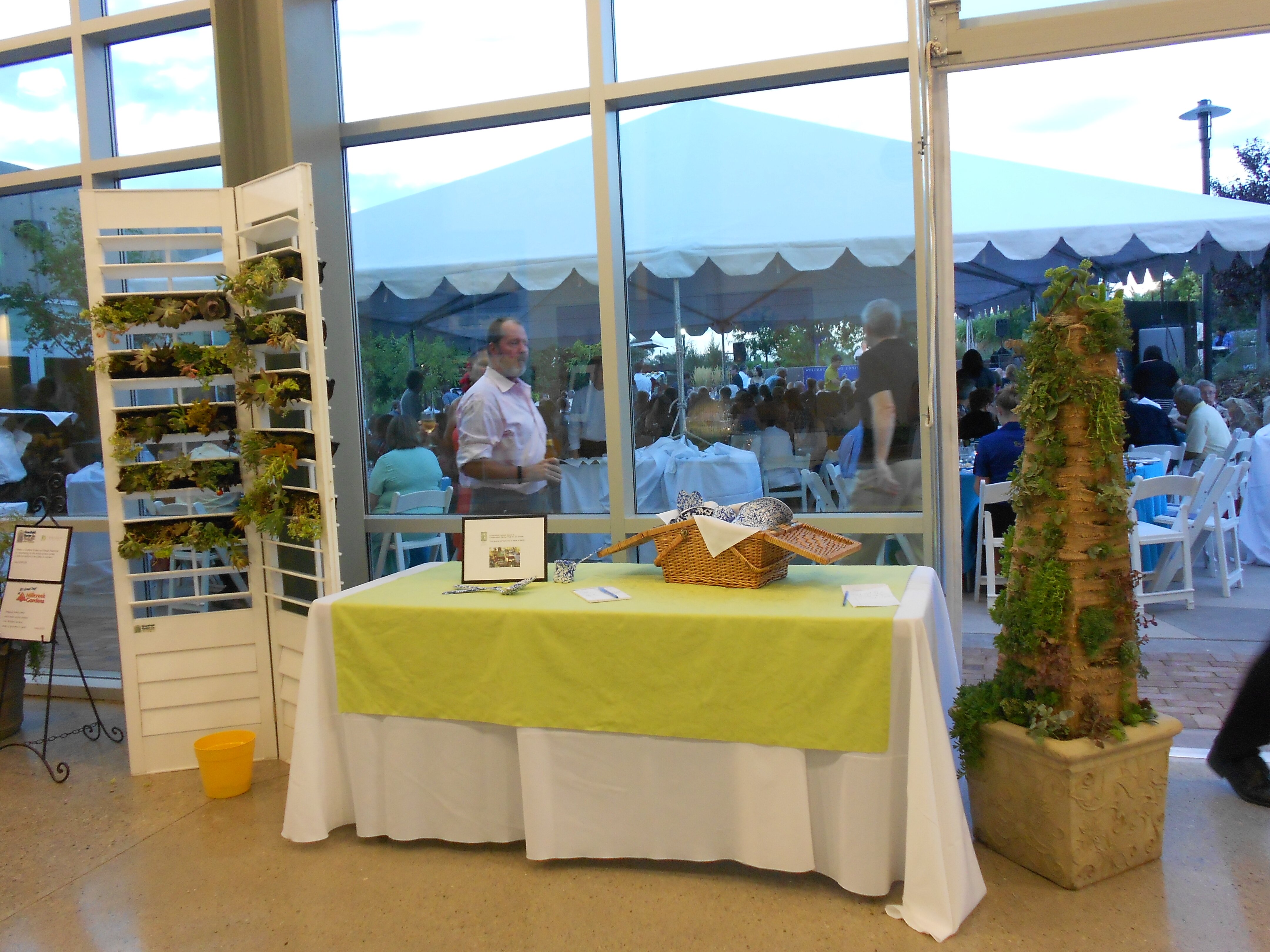
Looking to add a little green to your Plantation Shutters, just make a 'Plant'ation shutter planter.  With her environmentally friendly thinking and creative talents Cynthia Bee, of designresourceutah.com, donated her time and talents to the Conservation Garden Park. Using an idea from another floral designer Cynthia created a living work of art by transforming a used pair of plantation shutters into a planter by adding water wise succulent plants to the shutters. Read on to find out more about this project.  In addition check out Cynthia's blog Utahgardenblogs.com for other information and ideas for your home and garden.

Otherwise known as a 'Plant'ation Privacy Screen. Like many of you, I saw the original idea for this project in Sunset Magazine, though I am sure the designer who created it was not the first to do this, she certainly did it up beautiful! The Sunset Magazine version featured a gorgeous project completed by San Francisco area floral designer, Baylor Chapman of LilaB Designs. The magazine gave a little information on how the shutters were constructed and it sounded pretty basic (weed barrier fabric was stapled to the shutter to create pockets), so I thought I'd give it a try.


"'Plant'ation Privacy Screen on the auction block at the fundraising Gala for Conservation Garden Park"


Except that I don't live in the ideal climate provided by the California Coast which meant I had a lot more factors to take into consideration than the original designer would have to worry about. Not even succulents can survive our real-world heat and intense summer sunlight planted in just weed barrier fabric pockets! In addition, I did't want to be limited to just Utah-hardy succulents (sedums and sempervivums), I wanted to enjoy the massive array of Mediterranean climate succulents- which means overwintering them indoors and THAT meant making it possible for the plants to be overwintered indoors. This "easy" project is getting a lot harder already! Luckily, I like a challenge and I lack a reliable idea filter.


The first thing I needed to make the project work was a plantation shutter. Ideally, you'd use solid wood (as I did) or, even better, vinyl. The classifieds section is a good place to find a used shutter. Since I was creating my to be a one-of-a-kind piece for a Charity auction to benefit Conservation Garden Park, I decided to try and get a nice one donated.


I was a little nervous to call Stanfield Shutter (the leading company in this area for plantation shutters) and tell them about my crazy idea! Thankfully, not only did they hear me out without hanging up, they gave me a huge 6 foot tall by 4 foot wide shutter with extra wide slats to play with! Thanks to Stanfield Shutter!


"Thanks to Stanfield Shutter for donating this gorgeous plantation shutter!"


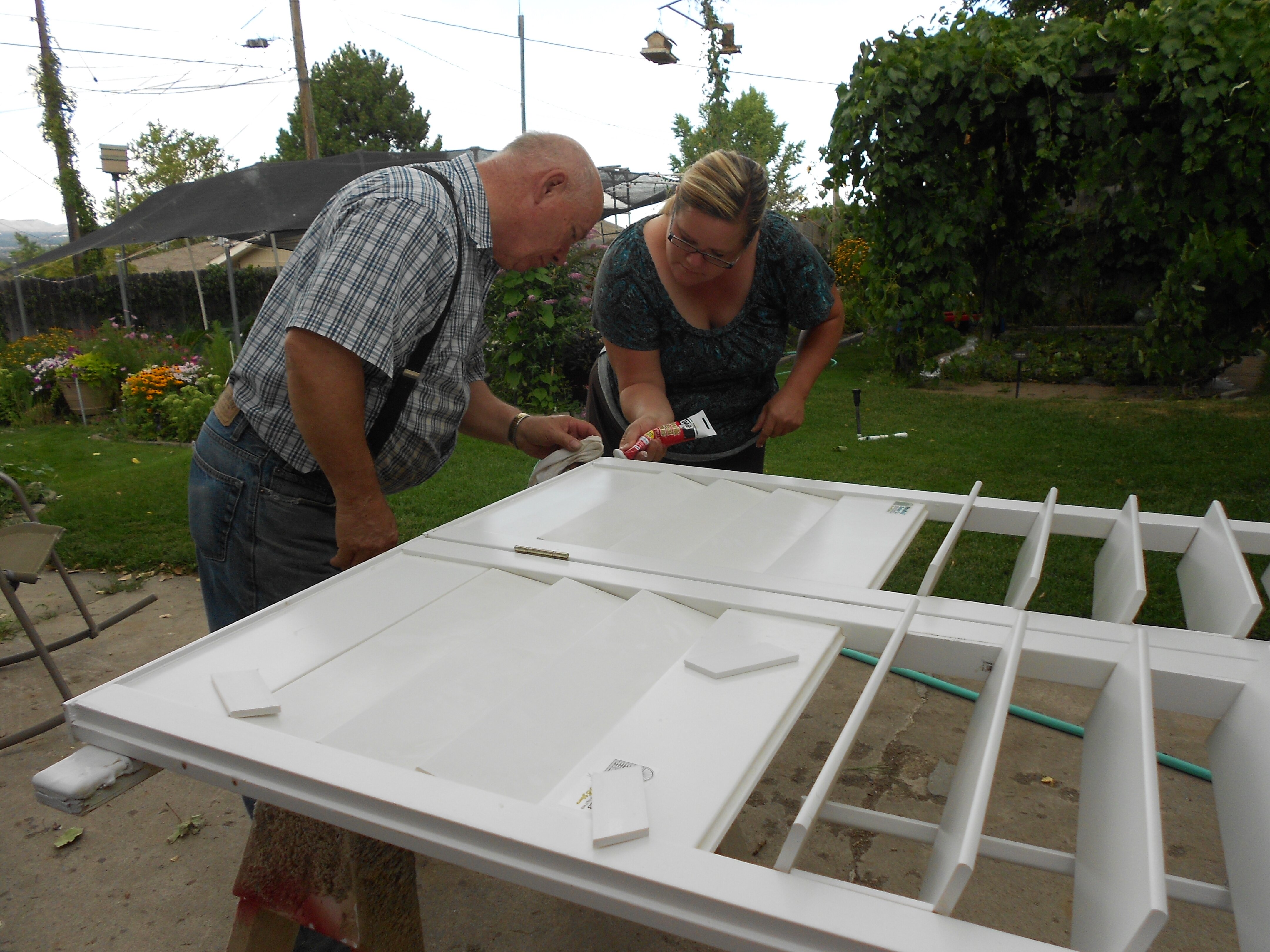
The next step was to retrofit it for our purposes. This meant adding vinyl trim pieces to the top and bottom of the shutter for better weather protection and gluing vinyl wedges between the slats to hold them in the desired open angle. I just purchased vinyl trim pieces from Home Depot for trimming out the shutter. My poor Dad (pictured below) is often roped into things like this, bless his heart. He's trained so well now that he just helps me get it done without thinking I've totally lost it. My spouse is still on a learning curve with that but he'll figure it out eventually!

"Retrofitting the shutter for long-term viability."


Once the plantation shutter is prepared, it's time to make the custom pockets. Now, I used a piece of paper to trace the shape along the ends I needed for the boxes which would account for the slope. That caused one side of my square shape to be longer than the other. Honestly, you could probably get away with just doing the sides the same length- once the plants grow the difference will be minimal.


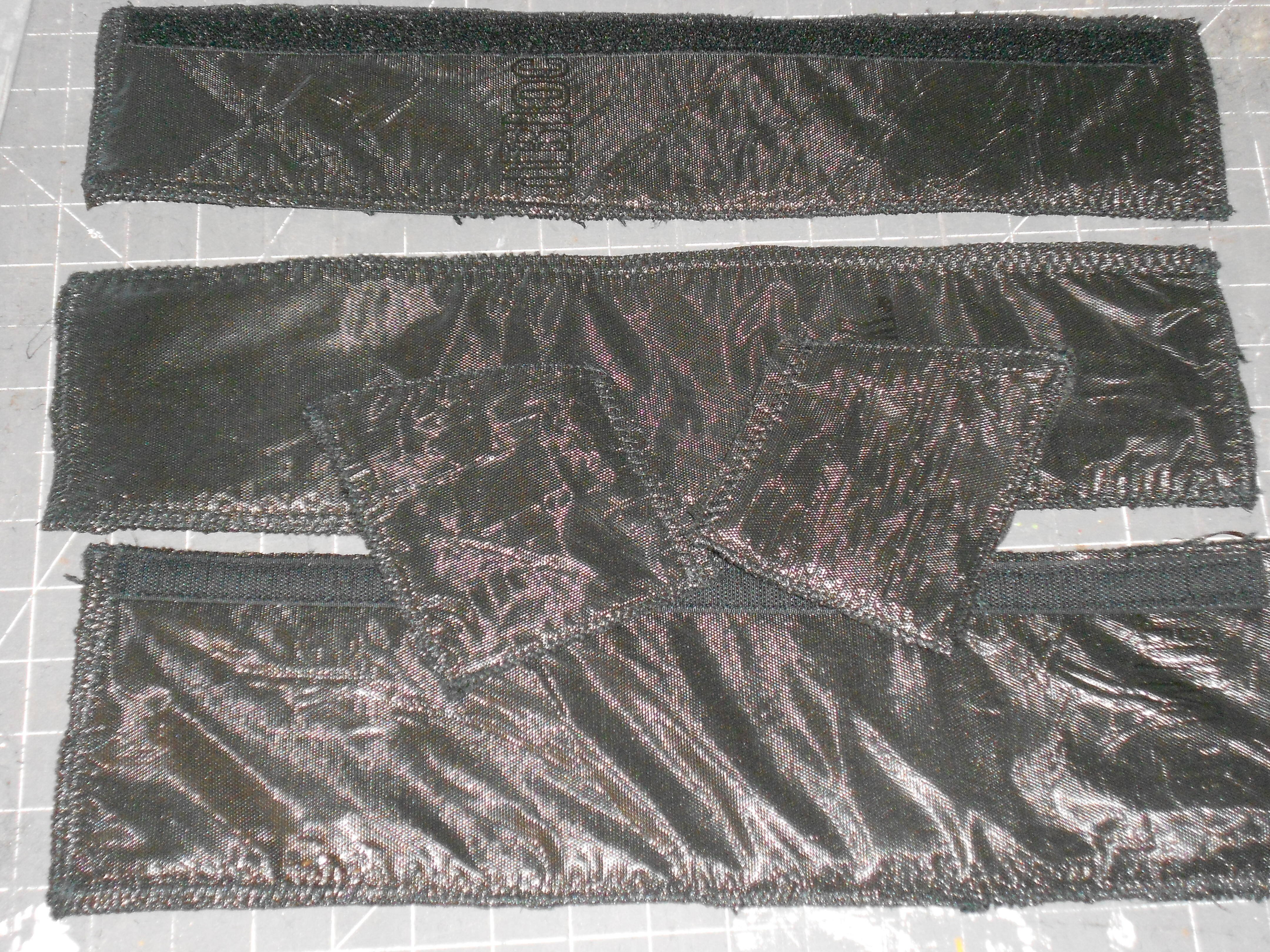
To create the pieces of the box, I used a layer of weed barrier fabric on the outside (allows air and water to pass but not too quickly), 2 layers of felt in the middle (to help insulate, hold water longer, and help retain the shape) and then a layer of burlap on the innermost surface (to give the roots something to grip). At first, I tried to make the seams be on the inside of the pocket but that doesn't work so well. You won't see the pockets so go ahead and do it the easy way by sewing the seams so that they are on the outside of the box. Just trust me on that!

"Pocket pieces before stitching together."


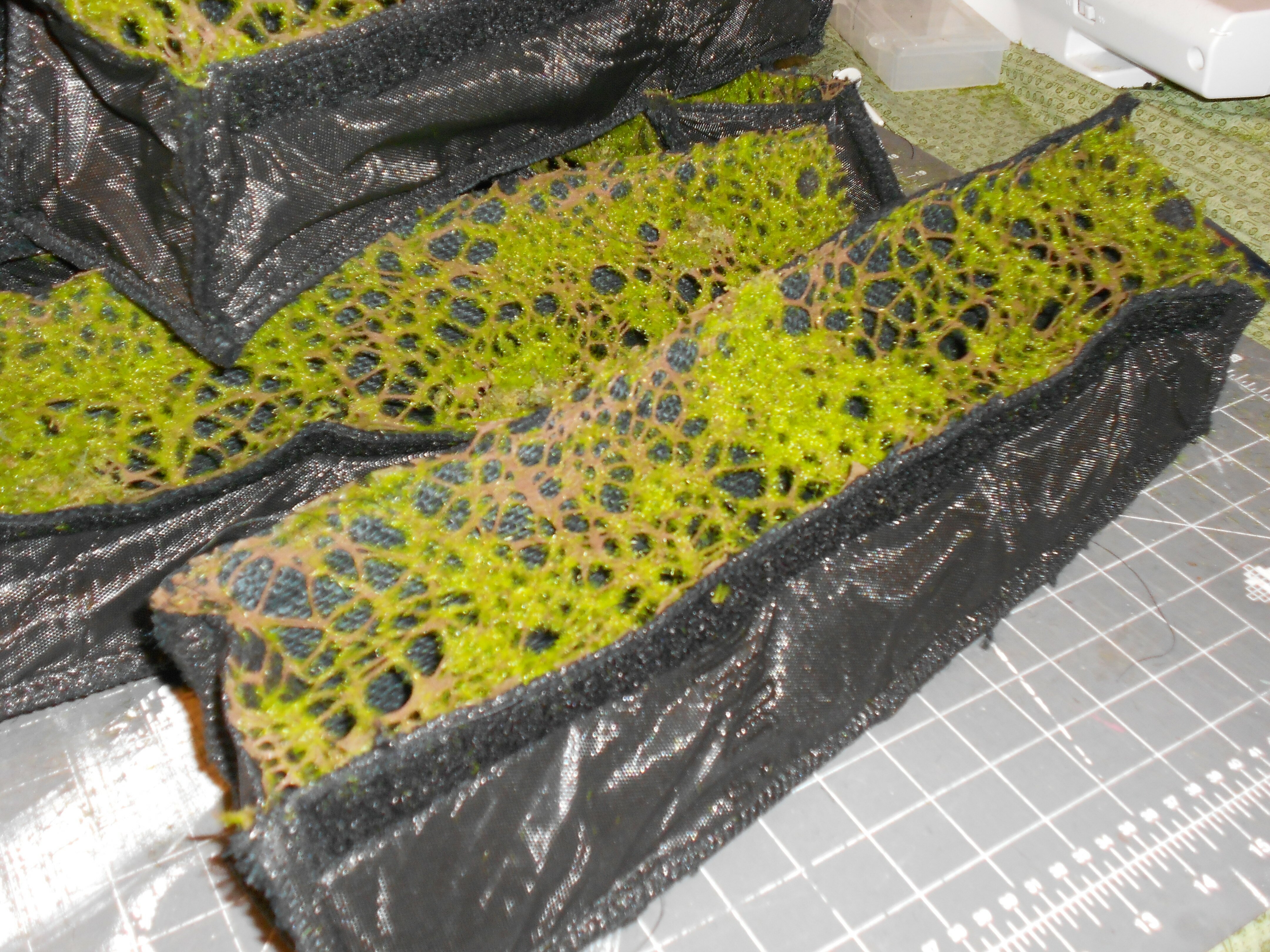
For the top, I used a special 'fabric' type thing I get locally at Tai Pan Trading. It is a synthetic mesh which has real moss adhered to it. It's messy. Bits of it are still in my sewing machine but it's worth it. The mesh works really well for vertical gardening projects because it enables the plants to grow through it while the brown mesh and green moss serve as camouflage for the other elements in a vertical application. I wish I could find an online source for it but since I don't even know what it's called, that would be hard. I am sure you can use other types of mesh product so long as they have larger holes (no fine mesh). Even so, you'll still have to cut a few bigger holes in the mesh to insert the plants.


"Empty pockets with moss mesh tops."

I filled the finished pockets with a special soil formula which involved perlite, succulent soil mix and coconut fiber. As always, I rinsed the soil off the original plants. Every grower useke our REAL sun at this altitude! This screen has spent most of it's time indoors since it was planted. I watered the plants thoroughly right after planting 2 weeks ago and just now watered them again. Please note, the plants NEED to dry out after watering. They prefer a good soak so the soil is fully wet and then a good period of dry soil before wetting it again. A consistently moist soil or lightly misting them with a spray bottle will produce less desirable results. Consistently moist soil is the kiss of death for succulents while misting will create shallow roots and weak plants.

In the proper setting and with a water resistant shutter, you wouldn't have to remove the pockets at all for watering outdoors, just s for plants to be added. Cut the mesh as needed to get the root balls inserted. You MAY have to sew or zip tie the mesh closed if the hole is large."


As for watering frequency, the succulents would need to be watered about once per week if the shutter is outside and in PART SHADE- the non-hardy succulents can't take our REAL sun at this altituden: left;"> The end result of all this work is a planted privacy screen that can be installed on a deck for the warm season and stored away in the cold months (unless you've got a sunny south window and a tile floor indoors!) The plant pockets can be removed for watering if you don't have a vinyl shutter and you want to ensure better long-term survival of the shutter. The pockets are narrow enough to overwinter in a sunny windowsill.


"Plants will eventually be large enough to hide the gaps."

The end result of all this work is a planted privacy screen that can be instathem into the shutter openings but you can get away with putting them in immediately so long as you don't move the screen around much.


"Pockets fitted into the Louvers"


Pockets can be repositioned to improve privacy. Plants will grow at least 3x larger than their current size.

In the case of my planted pockets, the winners of this item are out of the country for awhile so I'll likely be overwintering it for them in a nice warm greenhouse with all of my own plants. I wonder if my work will notice that I snuck them into our new greenhouse!?


Ideally, you would let the plants grow in the pockets for a 6-8 weeks to establish themselves before popping them into the shutter openings but you can get away with putting them in immediately so long as you don't move the screen around much.


I'd like to make a screen FOR MYSELF now that I've got the whole process figured out and engineered but I'm rather worn out from making this one! I will confess that part of me hopes the new owners decide they don't really want it (and the required maintenance) and I get to keep it! Cross your fingers!


The project CAN be done reasonably cheap if you can find an inexpensive used shutter and use small plants. A little patience always pays off with succulents as they'll propagate themselves given the right conditions. The pockets are a bit time consuming if you sew them so they are removable as I did.

"On display for the Garden Gala"


If you just want to keep it outside permanently, you can probably get away with stapling the materials to the slats as the original designer did but I would recommend you use similar materials to those I recommended above or your plants will dry out much too quick.


I would rate this project a 3 of 5 stars for difficulty if you're making removable pockets as I did. If you just staple the fabrics in place, it's a 1 of 5 stars for difficulty but may be more a pain over the long term for maintenance. While the project is not that hard, it can take a lot of time to create AND care for. Make sure you're willing to do both of those things before starting. If anyone else is crazy enough to attempt it, feel free to ask questions in the comment section or e-mail me. I'd love to see photos when you're done!

Wednesday, August 31, 2011

How Your shutters are made......


Ever wonder how your shutters are made?  Click Above and Check it Out....

Monday, August 1, 2011

Check Out Recent addition to YouTube.....EnJoy!!!

Stanfield Shutter Company, "We Were Into Shutters Before Shutters Were IN"


Tuesday, April 5, 2011

Savannah Shutters....


Our Savannah Shutter is the most popular shutter line we sell for a number of reasons. First, our Savannah shutters are the most economical shutter we sell. Second, our Savannah shutters do not warp. Third, our Savannah shutters are strong, durable, and made with high quality HDF (High Density Fiberboard). We have been producing shutters since 1949 and for almost half that time natural hardwood, especially Cedar,
was the staple of our shutter construction. Cedar was light, durable, and cost effective. Then, in the late 1950’s and early 1960’s lumber mills, enticed by a number of factors, began researching, developing, and introducing new products that were superior in many ways to natural hardwoods.


In 1966 the prototypes for today’s MDF (medium density fiberboard) were developed and, as time passed and technology improved, HDF (high density fiberboard), a more refined and durable version of MDF, was developed. HDF is a technologically refined natural wood product. First, the wood is refined into long fibrous strands which are cleaned to remove any imperfections, damaging natural resins, pitch, and sap. Then the strands are elongated and further refined to remove any physical imperfections or defects which could lower the product’s performance. Next the fibrous strands are rebound under intense heat and pressure with high grade industrial adhesives, resins, and bonding agents. Finally the product is quality controlled with precise laser instruments to ensure strength, durability, smoothness, and quality. 


Finish craftsmen use HDF when the inconsistencies and uncertainty of natural hardwood could undermine the integrity of the final product. Fine shutter manufacturers use HDF because it preserves the strength and durability of wood while providing the added benefit of a warp-free material. In addition, HDF does not have a natural grain which can hinder the painting process and reduce the overall quality of the final painted product. HDF also produces less waste then unrefined woods which in turn lowers the finished cost of the product. We manufacture our Savannah Shutters with high quality HDF that is durable, warp-free, and economical because we want to put quality in our homes and yours.


The Savannah shutters are the best choice for paint grade (white, off-white, or solid colors) shutters. These shutters are warp free, have a smooth painting surface, retain the same strength and resistance of natural hardwood, and they are more economical! When choosing paint grade shutters almost all of our customers choose the Savannah shutter. When high quality and low cost are major concerns, the Savannah shutter is the best possible choice.


When the shutters are closed virtually all the direct sunlight is blocked out darkening the room significantly. So if the afternoon sun has you running for the basement, just adjust your louver blades to block the sunlight, sit back, and relax in your favorite chair. Over 75% of our orders are for painted shutters, so if you are confused on which type of shutter you should order just remember, you can never go wrong with our Savannah shutter.